Monday, July 30, 2012

Today in AfricanAmerican History Daniel Hale Williams Performs First Successful Open Heart Surgery

On July 9, 1893, John Cornish was rushed to Provident Hospital after being stabbed in the chest during a brawl. A doctor at the hospital worked diligently to save Cornish's life--opening his chest and performing a number of procedures.

Cornish lived and fifty days later, he was discharged from the hospital

The physician that saved Cornish's life was Daniel Hale Williams, who wouldbecome the first surgeon to successfully perform open heart surgery. Williams' work would become the foundation forsurgical procedures in years to come.


This Week in AfricanAmerican History May 9 to May 15

Poor People's Campaign Protesters

Image Courtesy of Getty Images

May 9

1800:Abolitionist John Brown is born.

1867:Abolitionist and feminist Sojourner Truth delivers a speech at the first meeting of the American Equal Rights Association.

May 10

1837:Pickney Benton Stewart Pinchback, a lieutenant governor of Louisiana during the Reconstruction Era is born.

1919:One of the riots associated with the Red Summer of 1919 occurs in Charleston. Two African-Americans are killed.

1950:Jackie Robinson becomes the first African-American to appear of the cover of Life magazine.

May 11

Louis Farrakhan, a leader in the Nation of Islam is born.

May 12

1950:Oscar DePriest, the first African-American to serve in the United States Congress, dies.

1968:Participants in Martin Luther King Jr.'s Poor People's Campaign begin a two-week protest in Washington D.C.

May 13

1914: Heavyweight boxing champion, Joe Louis, is born.

May 14

1963:Arthur Ashe becomes the first African-American to make the U.S. Davis Cup tennis team.

May 15

1942:The 92nd Infantry is activated in the South Pacific, becoming the first African-American division formed during World War Two.

Suggested Reading

http://womenshistory.about.com/od/sojournertruth/a/sojourner_truth_bio.htm

John Brown

Jackie Robinson

Joe Louis

Arthur Ashe


Today in AfricanAmerican History Benjamin Banneker Designs the Nations Capitol

banneker

On March 12, 1791, Benjamin Banneker, a self-educated mathematician, writer, astronomer and inventor became the first African-American to receive a presidential appointment.

For more than thirty years, Banneker's astronomical predictions, inventions and published writings helped create changes in American society. However, it is his work on our nation's capital that is most notable. When Pierre L'Enfant resigned from from his position as chief designer of Washington D.C., he took the layout plans, leaving the surveyors without any plans to finish. Using only his memory, Banneker was able to recreate L'Enfant's designs.

plans for d.c.

Public Domain. Images Courtesy of Wikimedia Commons

About Benjamin Banneker

African-Americans in Astronomy and Space

This Week in AfricanAmerican History May 2 to May 8

May 2

1844: Inventor Elijah McCoy, also known as the "Real McCoy," is born in Ontario, Canada. An inventor, McCoy owned patents to fifty inventions that enhanced the running of many engine-operated machines.

1920: The National Negro Baseball League plays its first game in Indianapolis.

May 3

1845: Macon B. Allen becomes the first African-American allowed to practice law in the United States after he passed the Massachusetts bar. In 1873, Allen was appointed to a judgeship in South Carolina.

May 4

1891: Provident Hospital, the first integrated hospital in the United States is founded by Dr. Daniel Hale Williams. Located in Chicago, Provident Hospital becomes a training ground for African-American doctors and nurses.

1961: The thirteen Freedom Riders begin traveling through the South on buses to assess Southern compliance with the 1960 U.S. Supreme Court ruling that outlawed segregation in interstate transportation facilities.

May 5

1865: Baptist minister and community activist Adam Clayton Powell, Sr. is born. Under his tutelage, Abyssinian Baptist Church becomes the largestProtestant congregation in the United States.

1905:

Using a collection of articles from other news publications and his own reporting, Robert S. Abbott publishes the first issue of the Chicago Defender.

May 6

1787: Prince Hall establishes the first African-American Masonic Lodge in Boston.

1812: Pan-Africanist Martin R. Delay is born in Charles Town, Va.

May 7

1950: Poet Gwendolyn Brooks is awarded the Pulitzer Prize.

May 8

1858: Prominent abolitionist and writer, William Wells Brown, publishes the first play by an African-American. Entitled "Escape," the play emphasizes the complex feeling of being American.

1925 The Brotherhood of Sleeping Car Porters is founded by Asa Philip Randolph.


July 2 The Civil Rights Act of 1964 is Signed

Lyndon B. Johnson signs Civil Rights Act of 1964Public DomainForty-eight years ago today President Lyndon B. Johnson signed the Civil Rights Act of 1964. The law banned discrimination in publicfacilities, racial segregation in schools and established the Equal Employment Opportunity Commission to fight against workplace discrimination. The Civil Rights Act of 1964 also abolished voter registration requirements such as poll taxes and literacy tests that had systemically kept African-Americans from voting.Johnson's decision to sign the Civil Rights Act of 1964 was not an act of pure altruism. Instead, it was the work of civil rights leaders such as Martin Luther King, Jr. and Thurgood Marshall whose efforts helped both black and white Americans understand the importance of fighting for change in society.After signing the Civil Rights Act of 1964, Johnson told Americans:"we have come to a time of testing. We must not fail. Let us close the springs of racial poison. Let us pray for wise and understanding hearts. Let us lay aside irrelevantdifferences and make our nation whole. Let us hasten that day when our unmeasured strength and our unbounded spirit will befree to do the great works ordained for this nation by the just and wise God who is the father of us all.''Months later, when Dr. King was awarded the Nobel Peace Prize, he agreed with Johnson's words saying,"The problem is far from solved. We still have a long, long way to go before the dream of freedom is a reality for the Negro in the United States."Some people believe that ending societal racism has been a constant battle in the United States--that peace has not been achieved. However, what do you think has been the greatest achievement of the Civil Rights Act of 1964?

1940 Census Data A Powerful Tool for AfricanAmerican Researchers

Early this morning a national treasure was opened: the 1940 Census .

The records of more than 130 million Americans are now available to everyone who wants to use the data--from historians and genealogical researchers to everyday Americans who want to research the history of their families.

For African-Americans such as blogger Robin Foster, of Saving Our Stories, the 1940 census is a valuable tool in documenting her family history. In a recent blog post, Foster wrote of viewing previous census records, "The excitement I feel as I pour over its pages along with the satisfaction and pride I feel as I closely inspect the family groups has not been something that I have articulated before now." In an updated blog post, Foster wondered how she would feel seeing her parent's names for the first time on the 1940 census also stating, "I have also been inspired to pay closer attention to the history and events of the 1940s.

So have I.

In April of 1940, the editorial board of The Crisis, argued that African-Americans had a "special obligation" to participate in the U.S. Census. The editorial, "Aid the Census," demands that readers fill out the census because "they [African-Americans] need the census to refute arguments that they don't own property and pay few taxes" Editorial writers ended their argument by reminding readers that "accurate answers to the questions will help the race to its proper status." Reading this editorial in The Crisis has made me wonder if African-American participation in the 1940 census did help create the wheels of change in United States' society.

I think, in time, African-American participation in the census did make a contribution to American life and culture--it was one more instance of a marginalized group insisting that they too, were part of America.

So what does the 1940 census data mean to you? How will you use the data to learn more about your personal family history or even, the history of the United States?


Today in AfricanAmerican History The Dred Scott Decision

Painting of Dred Scott

Public Domain. Image Courtesy of Wikimedia Commons.

On March 6, 1857, the United States Supreme Court upheld the rulings of lower courts in the case of Dred Scott v. Sanford.

In its ruling the court stated that African-Americans--whether freed or enslaved--were not and could not be considered citizens of the United States. In addition, the Supreme Court proclaimed that the Missouri Compromise was unconstitutional.

  • Dred Scott v. Sandford

The National Museum of African American History and Culture

A beautiful and moving groundbreaking ceremony was held this morning for the Smithsonian's 19th museum, the National Museum of African American History and Culture.

The museum, which is being built on the The Mall in Washington, D.C., will be devoted to the documentation of African American life, art, history, and culture. President Obama, speaking at the groundbreaking ceremony, noted that the idea for the museum had been "a long time coming," as the idea was first proposed by black veterans who had fought for the Union in the Civil War.

Congressman John Lewis, a veteran of the Civil Rights Movement, who President Obama referred to as "my hero," spoke movingly of the museum and its meaning. Congressman Lewis had worked for years in Congress on the legislation to create the museum.

The museum is scheduled to open in 2015. The groundbreaking ceremony was broadcast on C-Span, and a video of the event can be viewed on the C-Span web site. The network also plans to rebroadcast the event.

News coverage of the event has appeared at NPR, CNN, the Chicago Tribune, USA Today, the Washington Post, and the New York Times.

Update: The Smithsonian has posted a video of the entire event to its YouTube channel.

Photograph: President Obama speaking at the groundbreaking ceremony for the National Museum of African American History and Culture/Getty Images


Today in AfricanAmerican History The Dred Scott Decision

Painting of Dred Scott

Public Domain. Image Courtesy of Wikimedia Commons.

On March 6, 1857, the United States Supreme Court upheld the rulings of lower courts in the case of Dred Scott v. Sanford.

In its ruling the court stated that African-Americans--whether freed or enslaved--were not and could not be considered citizens of the United States. In addition, the Supreme Court proclaimed that the Missouri Compromise was unconstitutional.

  • Dred Scott v. Sandford

Today in AfricanAmerican History Malcolm X is Born

Malcolm X

Image Courtesy of Getty Images/MPI

One of my favorite quotes from Malcolm X is "I am not educated, nor am I an expert in any particular field...but I am sincere and my sincerity is my credential."

Outspoken, honest and seemingly fearless, Malcolm X instilled pride in African-Americans through his personal story of transcendence, his speeches and his published works. Although his philosophy was different the Martin Luther King, their desires were the same: equality for African-Americans.

When I think of Malcolm X, I instantly think about the power of evolution.

Throughout X's life, he endured many tragedies--the murder of his father and being placed in foster care when his mother could not care for him or his siblings, to being imprisoned for robbery as a young man.But I also think of all his triumphs. Malcolm X learned to not only read while imprisoned, but also be critical of a society that had oppressed African-Americans since enslavement. He used the power of literacy to become a man who could speak and encourage people to change society. He used the power of literacy to become a man who would be admired long after his assassination.

Today would have been Malcolm X's 87th birthday. He was killed on February 19, 1965 because of his candor. However, his legacy as a fearless fighter for people of African descent lives on.


Today in AfricanAmerican History July 5 1852

Frederick Douglass delivered countless speeches concerning the plight of African-Americans. With honesty and clarity, Douglass spoke from the point of view of a former slave. And through his speeches, narratives and editorials in the North Star, Douglass persuaded others to believe that enslavement needed to be abolished.

One of Douglass' most famous speeches, "The Meaning of the Fourth of July for the Negro," was delivered on July 5, 1852 in Rochester, NY. In his speech, Douglass argues:

What, to the American slave, is your 4th of July? I answer; a day that reveals to him, more than all other days in the year, the gross injustice and cruelty to which he is the constant victim. To him, your celebration is a sham; your boasted liberty, an unholy license; your national greatness, swelling vanity; your sound of rejoicing are empty and heartless; your denunciation of tyrants brass fronted impudence; your shout of liberty and equality, hollow mockery; your prayers and hymns, your sermons and thanks-givings, with all your religious parade and solemnity, are to him, mere bombast, fraud, deception, impiety, and hypocrisy -- a thin veil to cover up crimes which would disgrace a nation of savages. There is not a nation on the earth guilty of practices more shocking and bloody than are the people of the United States, at this very hour.
Thoughtful, powerful and always honest, Douglass' speech paved the way for the emancipation of slaves thirteen years later. Readers, how have Douglass' words inspired you?


The Civil Rights Movement in the Early 1960s

When we think of the Civil Rights Movement, we tend to think of the 1960s. The Movement had been growing for decades, and it was in the early 1960s that things really began to happen.

The Freedom Riders risked their lives in 1961 by riding Greyhound buses into the Deep South, where they would be attacked by the Ku Klux Klan.

In August 1963 Dr. Martin Luther King led the March on Washington, an enormous event which brought the Civil Rights Movement to the forefront of the national conversation. And, of course, Dr. King, on the steps of the Lincoln Memorial, delivered his classic "I Have a Dream" speech.

After the assassination of President Kennedy in November 1963, President Johnson devoted considerable effort to Civil Rights. And the following year was one of struggles and triumphs. Three young Civil Rights workers were murdered in Mississippi in 1964, but the Civil Rights act of 1964 was passed by Congress and signed into law by President Johnson.

The timeline of the Civil Rights Movement in the early 1960s reflects the intensity of the times.

Photograph: The March on Washington, August 28, 1963/Getty Images


Henry Ossawa Tanner Defying Stereotypes Through Banjo Lesson

Banjo Lesson by Henry Ossawa Tanner

Wikimedia Commons. Public Domain

In many ways, images are much more powerful than published words. While words are forgotten, images remain in our memories forever.

So imagine this: it is 1893. Literacy tests, poll taxes and grandfather clauses have been established in several southern states to disenfranchise African-American men. In popular culture, African-Americans are depicted with exaggerated facial features, eating watermelon and playing banjos.

And with a few strokes of a paintbrush, Henry Ossawa Tanner creates an image of an older African-American man teaching a young boy how to play the banjo. And through this image, Tanner is reinterpreting the symbol of being a banjo player: it is not something to be considered shameful--it is an image of pride and legacy.

Painter Henry Ossawa Tanner is the most acclaimed African-American painter of the 19th Century. His painting Banjo Lesson, created in 1893 was different than other depictions of African-Americans


Discovering Family History and a Complex Legal System

Image Courtesy of Wikimedia Commons. Public Domain

The right to vote is a liberty that many Americans take for granted. For Tobias Carter, a former slave, it was a privilege he was ready to exercise.

In 1865, Carter was emancipated from slavery through the 13th Amendment. Later, Carter received full citizenship through the 14th Amendment. And by March 30, 1870, the 15th Amendmentwas adopted into the U.S. Constitution, allowing Carter to vote.

Nevertheless, in 1965, his great-great grandson, John Robert Lewis was marching through the streets of Alabama for that same right.

Can we say ironic?

Lewis, who is now a congressional representative in Georgia, discovered this bit of family history while participating in PBS' ten-part series, Finding Your Roots. In each episode, historian Henry Louis Gates uncovers the legacies of two well-known Americans--helping them answer questions about their family legacies.

Yet Lewis' family legacy offers viewers the opportunity to understand the complexity of the legal system---how one man can achieve the right to vote through a federal law yet his descendants have to fight for the right to vote because state laws created barriers to keep African-American citizens from voting. From poll taxes, literacy tests and the Grandfather Clause, Southern states consistently created and enforced laws that would never allow African-American men, and later women, the right to be fully citizens in society. However, throughout United States' history, men such as Lewis countered these acts of disenfranchisement through organizations such as the Niagara Movement and later, the NAACP and SNCC. Men such as Robert Abott, publisher of The Chicago Defender and other African-American newspapers campaigned against segregation in the South and race riots such as The Red Summer of 1919.

What's your family history? How does your family history offer you an understanding of United States' history?

Suggested Reading

Thirteenth Amendment

The Reconstruction Period

The Civil Rights Movement


From Selma to Montgomery Marching to Vote

On March 25, 1965 more than 20,000 men, women and children arrived on the steps of the Alabama State Capitol building. For 17 days, marchers had traveled from Selma to Montgomery, demanding the right to vote. Civil Rights leader Martin Luther King, Jr. delivered the speech "How Long, Not Long," before handing the state's governor, George Wallace, a petition insisting that African-Americans in the state of Alabama be granted voting rights.

Related Articles

Voting Rights Act of 1965

March 1965 voting rights march

Martin Luther King Jr.'s speech, "How Long, Not Long"

Paul Laurence Dunbar Voice of a Generation

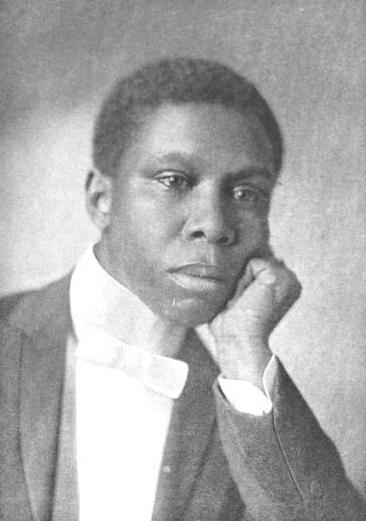
Paul Laurence Dunbar leaning on hand

Today is the last day of National Poetry Month and I've decided to end with a discussion of one of my favorite poems, "We Wear the Mask" by Paul Laurence Dunbar.

Published six years before W.E.B. Du Bois coined the term "double consciousness," Dunbar's poem evokes the feelings of African-Americans desiring true citizenship in a country that was consistently creating barriers that would hinder their inclusion in society.

My favorite lines of the poem are "With torn and bleeding hearts we smile,/And mouth with myriad subtleties." In my opinion, these lines show not only the emotional distress associated with being African-American at the height of the Jim Crow Era but also the perseverance to achieve greatness in United States' society.

What is your favorite Dunbar poem?

Suggested Reading

"We Wear the Mask"

W.E.B. Du Bois


The Civil Rights Movement In the 1950s

The Civil Rights Movement can often seem synonymous with the 1960s, especially as many iconic photographs from that decade became enduring symbols. Yet the previous decade was also a fascinating time.

While the Civil Rights Movement may not have been at center of American life in the 1950s, great strides were being made. The cause of a Kansas third-grader forced to attended a segregated school made its way to the U.S. Supreme Court, becoming the landmark desegregation case Brown vs. Board of Education.

In Montgomery, Alabama, Rosa Parks refused to give up her seat on a bus in December 1955, and her dedication led to the Montgomery Bus Boycott. In Little Rock, Arkansas, federal troops were dispatched in 1957 to enforce the desegregation of Little Rock Central High.

A timeline of the Civil Rights Movement in the 1950s illustrates the profound changes that were occurring as the stage was being set for the 1960s.

Photograph: Attorney and future Supreme Court Justice Thurgood Marshall, at a 1955 press conference discussing Civil Rights cases/Getty Images


Benjamin Tucker Tanner Promoting the AME Church

Benjamin Tucker Tanner

Public Domain. Wikimedia Commons.

In 1867, Benjamin Tucker Tanner, a minister in the African Methodist Episcopal Church, wrote An Apology for African Methodism. Offering readers a history of the AME Church, Tanner also underscores the progress that African-Americans have made through the AME Church.

I believe that Tanner published this text at a critical stage in African-American history: just two years after slavery was abolished. Former enslaved people needed a religious faith that would not only speak to their experiences but would also speak to their ability to create social change in their community. In other words, this was a text that could be used to expand the AME Church from the North into the South.

Suggested Reading

An Apology for African Methodism


Home of Josiah Henson In the News

The Washington Post's Civil War blog published an interesting item about the home of Josiah Henson, whose life is generally believed to have been an inspiration for the abolitionist novel Uncle Tom's Cabin.

The house in Maryland where Henson lived and worked as a slave from the late 1700s to 1830 has been restored and added to the National Register of Historic Places. Now known as the Josiah Henson Special Park, the location, in North Bethesda, Maryland, will be the site of special programs to mark Black History Month.

When Harriet Beecher Stowe wrote Uncle Tom's Cabin she based characters on real people. And Henson, who had escaped to freedom in Canada in 1830, was likely the inspiration for the character of George Harris, a fugitive slave.

Henson wrote his own life story in the late 1840s, which he updated in the late 1850s, following the success of Uncle Tom's Cabin. Prior to the Civil War, Henson aided a number of fugitive slaves who arrived in Canada. He remained in Canada after the war, and died in 1883 at the age of 93.

Illustration: Josiah Henson/Getty Images


Crispus Attucks Martyr of the Boston Massacre

Lithograph of Boston Massacre

Public Domain. Image Courtesy of Wikimedia Commons.

On March 5, 1770, eight British soldiers tried to break up an uncontrollable crowd in the streets of Boston. Five Bostonians were killed. The first to be killed was African-American sailor Crispus Attucks.

Throughout the 1760s, tensions were high in Boston. American colonists, who were helping to build the British Empire through various industries throughout the colonies, resented being heavily taxed with through laws such as Stamp Act and Townshend Act yet having no representation in British Parliament.

By 1770, conflict had reached its peak. Bostonians, angry with the treatment received by a British soldier, erupted into a street scuffle. Attucks, who was described as a "...tall robust man with a dark face" led the Bostonians to confront the British soldiers at the Custom's House. This event was later named the Boston Massacre by Sam Adams.

While all of the victims of the Boston Massacre have been hailed as heroes, Attucks' death served as great inspiration for African-Americans in Massachusetts to petition for the abolish of slavery and equal rights in society.

    Suggested Reading
  • American Revolution
  • The Boston Massacre

The AfricanAmerican Press Evolving or Lifeless

Is the African-American press still viable in the black community?

Bruce A. Dixon, editor of the Black Agenda argues that The Black Press is Dead. Dixon contends that African-American journalists and news publishers are no longer crusaders of social justice as they were during the Jim Crow Era. Instead, he argues that black journalists work for "white oriented, corporate-owned outlets." And African-American media outlets, once a bastion of social entrepreneurship, are now owned by media conglomerates such as Viacom, Clear-Channel and others.

I agree with many of Dixon's arguments. Yes, the majority of African-American journalists work for mainstream news organizations. Yes, African-American media outlets are not always independently owned any longer. And those that are independently owned, may be more concerned with advertising dollars than emphasizing the issues that plague many African-Americans in urban environments.

However, I am not certain if I believe that the African-American Press is completely dead.After all, how can an institution with such a strong legacy of galvanizing a community for change, really ever perish?

In 1827, John B. Russwurm and Samuel Cornish wrote in the first editorial of Freedom's Journal, "We wish to plead our own cause. Too long have others spoken for us."

During the Red Summer of 1919 the Chicago Defender exposed the horrors of race riots not only in Chicago, but throughout the nation.

And in 2012, as many black newspapers have folded, black media outlets have been sold to mainstream corporations, The Afro-American based out of Baltimore, celebrates 120 years of independent publication.

Instead, I believe that the black press is evolving. True, circulation of African-American newspapers is on the decline. Yes, media outlets such as Black Entertainment Television focus way too often on entertainment versus substantive information. However, let us not forget the importance of the Internet and the powerful words that are posted daily on blogs.

In a recent post, blogger Marc Polite of Polite on Society answers the question,"Can the Black Blogosphere Carry the Torch for the Black Press?". Polite argues that perhaps African-American bloggers need to build a strong coalition to reach audiences of issues concerning African-Americans locally, nationally and internationally. And in doing so, will reinvigorate the African-American press.

What do you think--is the African-American press dead? Or, can African-American bloggers become the muckrakers of the 21st Century?


AfricanAmerican History Month Celebration or Contradiction

More than a Month

Should observance of black history and culture continue to be relegated to February?

Shukree Hassan Tilghman, filmmaker and executive producer of the documentary More Than A Month, doesn't think so.

In a January 5, 2012, LA Times article, Tilghman and Sharon La Cruise--producer of the documentary, Daisy Bates: First Lady of Little Rock,--express their concern with celebrating African-American history and culture during the month of February. In the article, Tilghman contends that the fact that his film is being aired on PBS during the month of February underscores the importance of taking a critical look at African-American History Month, saying, "It can't really air in July, but I really want it to be seen outside the box, in July or August. March would be great."

African-American History is American History. It shows the struggles of African-Americans to overcome social, economic, and political oppression. The month displays the consistent hard work and perseverance of countless African-Americans who labored to create, develop, and sustain the United States. Furthermore, showcasing African -American history gives many African-American screenwriters and filmmakers, such as Tilghman and Le Cruise, the opportunity to have their work seen by millions of viewers.

Highlighting African--American history is laudable, but the question remains: Should the celebration of African-Americans' culture be encapsulated in one month? As a society, are we limiting further education and study with a 28-day observance? Share your thoughts.

Image Courtesy of Thiago Da Costa

AfricanAmerican History Month Celebration or Contradiction

More than a Month

Should observance of black history and culture continue to be relegated to February?

Shukree Hassan Tilghman, filmmaker and executive producer of the documentary More Than A Month, doesn't think so.

In a January 5, 2012, LA Times article, Tilghman and Sharon La Cruise--producer of the documentary, Daisy Bates: First Lady of Little Rock,--express their concern with celebrating African-American history and culture during the month of February. In the article, Tilghman contends that the fact that his film is being aired on PBS during the month of February underscores the importance of taking a critical look at African-American History Month, saying, "It can't really air in July, but I really want it to be seen outside the box, in July or August. March would be great."

African-American History is American History. It shows the struggles of African-Americans to overcome social, economic, and political oppression. The month displays the consistent hard work and perseverance of countless African-Americans who labored to create, develop, and sustain the United States. Furthermore, showcasing African -American history gives many African-American screenwriters and filmmakers, such as Tilghman and Le Cruise, the opportunity to have their work seen by millions of viewers.

Highlighting African--American history is laudable, but the question remains: Should the celebration of African-Americans' culture be encapsulated in one month? As a society, are we limiting further education and study with a 28-day observance? Share your thoughts.

Image Courtesy of Thiago Da Costa

Sadie Tanner Mossell Alexander Finishing First

Sadie Tanner Mossell Alexander

Public Domain. Wikimedia Commons.

Throughout Sadie Tanner Mossell Alexander's life, she was driven not to be good, but to be the best. She was driven to clear a new path when a road block was placed in her way.

As a result, Alexander can be noted as being the "first" African-American woman to accomplish many titles.

In 1921, Alexander became the first African-American woman to receive a PhD. On that same day, Alexander became the first African-American to receive a PhD in economics.

A few years later, in 1927, Alexander became the first African-American woman to graduate from the University of Pennsylvania Law School and the first to become a licensed lawyer in the state of Pennsylvania.

Yet, through all of her accomplishments, Alexander never forgot the importance of fighting for social inequality. She once said in an interview, "We must act now because the gap between what we believe as American ideals and what we practice is creating a moral dry rot within us. We are threatening the emotional and rational bases of our democracy." Throughout her career as a lawyer, she worked with the National Urban League and other organizations to create change. Through her work on President Truman's Human Rights Commission, Alexander helped lay the foundation for an understanding of civil rights in the United States.

Suggested Reading

Raymond Pace Alexander

Aaron Albert Mossell

Suggested Reading


The Struggles of the Freedmen

The Civil War freed millions from slavery, but the years following the conflict brought forth a new set of problems. There was, for a time, a glimpse of hope that freed slaves would receive their own small farms. Yet the promise of "forty acres and a mule" turned out to be more rumor than reality.

The federal government, with the formation of the Freedmen's Bureau, did take commendable steps to educate former slaves and help them find employment. A war hero with an abolitionist background, Gen. Oliver Otis Howard, from whom Howard University was named, was the first commissioner of the bureau.

General Howard's job wasn't easy. Many white southerners bitterly refused to accept new realities, and some schools set up by the Freedmen's Bureau were burned to the ground.

In the economic realm the freedmen faced other difficulties. The dream of owning land was simply put out of reach for many. And the system of sharecropping which became common in the South was, in some ways, not far from slavery.

The end of slavery is rightly celebrated as a great milestone. But the years which followed were marked by many struggles which should never be forgotten.


Dr Martin Luther King Jr

As we pause to observe Martin Luther King Day, it's a good time to look back on his career.

Dr. King first came to prominence as a leader of the Montgomery Bus Boycott, and his name became closely associated in the public mind with the Civil Rights Movement.

His "I have a dream" speech in August 1963 is often quoted, and it stands out as a classic American oration. And his "Letter From a Birmingham Jail" is also considered a major essay of the Civil Rights Movement.

Dr. King's colleague in the Civil Rights Movement, John Lewis, who is now a congressman from Georgia, remarked this morning on Twitter that today should be "a day on, not a day off," and urged Americans to get involved in a day of service in their communities. And Congressman Lewis also remembers his first meeting with Dr. King in a touching video at the Washington Post's tribute to the great leader of the Civil Rights Movement.

Photograph: Martin Luther King, Jr./Getty Images


Consequences of a Stolen Election

The election of 1876 was one of the most controversial in American history, as the winner of the popular vote and the probable winner of the electoral vote, Samuel J. Tilden, was denied the presidency.

And, in a sense, other losers of the election were African Americans in the South, who were establishing new lives a decade after the end of slavery.

In 1876, three states in the South held disputed elections, and the awarding of their electoral votes had to be decided by the U.S. Congress. In a highly unusual deal struck on Capitol Hill, members of Congress decided that Rutherford B. Hayes would be the winner of the presidential election.

Hayes was not even officially named the president-elect until days before he was sworn in on March 4, 1877.

Making the peculiar deal possible was the Compromise of 1877, in which southern Democrats said they wouldn't block the presidency of Hayes if he agreed to remove federal troops from the South and bring an end to Reconstruction.

Hayes agreed to that, and also to serve only one term. With Reconstruction thus ended, African Americans in the South were at the mercy of white legislatures, and the Jim Crow era came into being.

So not only was the election of 1876 most likely stolen, but the result proved to be a grave setback for African Americans.


Booker T Washington Unapologetic Accommodationist

Booker T. Washington Poster

Image Courtesy of Wikimedia Commons

Booker T. Washington once said, "an inch of progress is worth a yard of complaint."

Throughout Washington's career, he countered with much opposition from men such as William Monroe Trotter and W.E.B. Du Bois who felt that he was not doing enough to fight for an immediate end of racism and segregation in the United States.

Yet, Washington also had the support of working class African-Americans in the South who benefited greatly from his advocacy of industrial education. But most interesting to me, was his close relationship with white philanthropists and politicians. I have often wondered if Washington's philosophy of promoting education and entrepreneurship in lieu of racial equality was in the best interest of African-Americans during this time period. I still don't have an answer.

What do you think? Was Washington right to argue that African-Americans should prove their worth before gaining equal rights? Do you think he really believed in this philosophy or, was it a means to an end?

Suggested Reading

W.E.B. Du Bois

Progessive Era

African-Americans and the Progressive Era

William Monroe Trotter


Halle Tanner Dillon Johnson

Halle Tanner Dillon Johnson

Public Domain. Wikimedia Commons

Halle Tanner Dillon Johnson was a remarkable woman who came from a remarkable family.

Her father, Benjamin Tucker Tanner was a bishop in the African Methodist Episcopal Church. Her brother, Henry Ossawa Tanner was the first African-American artist to receive international acclaim.

Yet, Johnson's achievements also need to be recognized.

In 1891, Johnson, a widow and mother of a young child, graduated from the Women's Medical College of Pennsylvania. Determined to have a career, she decided to work with Booker T. Washington, providing healthcare services to students, staff and faculty at Tuskegee Institute. But before she could begin her job, Johnson had to pass a grueling ten-day medical licensing examination. Not only did she pass, but Johnson became the first woman--black or white--to pass and receive a medical license in the state of Alabama.


Selmas Bloody Sunday Commemorated

The March 1965 voting rights march in Selma, Alabama, which was violently attacked by state troopers at the Edmund Pettus Bridge, was commemorated this past weekend with another gathering at the bridge.

And besides honoring the historic march, a new march is setting out from Selma to Montgomery, Alabama, to protest the state's immigration law and new voter ID law.

Congressman John Lewis, a hero of the Civil Rights Movement, was in Selma yesterday, and is featured in an excellent segment broadcast by CBS News. Congressman Lewis, who was 22 when he helped lead the 1965 march, thought he might die that day. Veteran CBS correspondent Bill Plante was there as a young reporter.

President Obama issued a statement honoring the 1965 marchers, stating, "Today, we remember their courage in the face of danger and the spirit of perseverance that helped lead to iconic legislation like the Civil Rights Act and the Voting Rights Act. We also recommit ourselves to their struggle and to the idea that we should always seek a more perfect union."

Besides the recommended segment at CBS News, coverage of yesterday's events also appears at USA Today, the Birmingham News, and BET.

Photograph: Participants in the march from Selma to Montgomery in March 1965/Getty Images


Preserving the Underground Railroad

william still

Image Courtesy of Wikimedia Commons. Public Domain.
Why is legacy so important?

Clarence Still, a local New Jersey historian and descendant of abolitionist William Still, spent his lifetime answering this question.

In 1989, Still worked diligently to stop real estate developers from tearing down the Peter Mott House, a station on the Underground Railroad. The home was no more than a crumbling wooden structure that was in the way of development. But for Still, it was an important part of telling the story of African-American resistance to slavery in the 18th Century.

Today, the home is a museum. For the past eleven years, Still and other members of the Lawnside Historical Society worked to preserve and maintain the Peter Mott House. The Lawnside Historical Society has also worked to preserve the legacy of Lawnside, the state's oldest African-American incorporated municipality.

And every year, Still hosted the Still Family Reunion--bringing William Still's descendants together from all over the United States.

Still passed away on Friday in his home. However, Still's legacy as a historian and preserver of African-American history lives on.

Suggested Reading

Lawnside Historical Society

The Underground Railroad by William Still


Celebrate Life Not Death

Mourners follow the casket of Martin Luther King Jr.

Getty Images

Learned. Charismatic. Thoughtful. Task-Committed. Everlasting.

When I think of Martin Luther King, Jr., these words immediately come to mind. Although he was assassinated 44 years ago today, his legacy--which professed a love for every human being, an end to inequality in American society and universal peace is alive.

One of my favorite quotes from King can be found in Letter From a Birmingham Jail, a note written to eight white clergyman in response to their argument that the fight to end racial segregation should be fought through the legal system and not in the streets. In his letter, King writes, "shallow understanding from people of good will is more frustrating than absolute understanding from people of ill will," showing everyone--in 1963 and in 2012, the power and honesty of his words.

King's assassination took all but a minute--a few bullets from a man who was symbolic of so many people who were afraid of change. But King's candor, strength and perseverance lives on through his words, his images and in the hearts of all Americans who want to create change in society.

Suggested Reading

The History of Martin Luther King, Jr. Day

A Look at Martin Luther King's Speeches


The Talented Tanners

Tanner Family

Public Domain

Confession: I had no intentions of writing about the Tanner family this month. However, when I began writing a profile on Henry Ossawa Tanner, I learned that his father, Benjamin Tucker Tanner was an influential bishop in the African Methodist Episcopal Church. I then learned about Tanner's daughter, Halle Tanner Dillon Johnson, who became the first woman to be licensed to practice medicine in the state of Alabama. Later I learned of his granddaughter, Sadie Tanner Mossell Alexander, who was the first African-American woman to earn a PhD in the United States.

Wow, what a legacy of accomplishment. What an inspiration to readers. In coming months, I plan to expand my content to include profiles on the Mossell family--equally as accomplished as the Tanners with quite a story to tell!


The Underground Railroad

In the 1840s newspapers began using a term Underground Railroad to refer to a mysterious network by which escaped slaves would travel northward, eventually finding freedom in Canada.

To some Americans, assisting escaped slaves was noble work. Yet it was also a serious violation of the federal laws pertaining to fugitive slaves, meaning such activity had to be kept very quiet.

A secretive organization by necessity, the Underground Railroad kept no records, and much of what we know about it is based on accounts written years later. But what is known is quite remarkable.

Men such as Levi Coffin organized groups of Quakers in Ohio and Indiana who helped transport slaves who had crossed the Ohio River from Kentucky.

And the heroic Harriet Tubman, who escaped from a life of slavery in Maryland, made many trips back into slave territory to lead others to freedom. She was called "Moses" by many, and the fanatical abolitionist John Brown called her "General Tubman."

While many of the workings of the Underground Railroad may always remain a secret, we do know that it did exist, and it did help thousands of slaves find new lives in freedom.

Photograph: Harriet Tubman/Library of Congress


Black History Month

As we commemorate Black History Month, it's an ideal time to pay tribute to the life and career of historian Carter G. Woodson, who is often cited as the creator of the field of African-American History. Woodson, who passed away in 1950, did not live to see the great achievements of the Civil Rights Movement, but his groundbreaking work inspired many and led to the creation of Black History Month.

Woodson promoted the week of February 7, 1926 as the first Negro History Week, as it would include the birthdays of Abraham Lincoln and Frederick Douglass. Woodson's hope was that young African Americans would celebrate the accomplishments of their ancestors.

Over the years the tradition developed of observing Negro History Week. And during America's bicentennial celebrations in 1976 the idea was expanded to Black History Month, which was made official by President Jimmy Carter in 1978.

Illustration: Historian Carter G. Woodson/Getty Images


A Poets Rage

Red Summer of 1919 - Oklahoma Riots

Image Courtesy of Wikimedia Commons

One of my favorite poems is "Claude McKay's "If We Must Die."

Passionate and defiant, McKay's sonnet illustrates the harsh consequences that racism presents not to all Americans. Inspired by images of race riots that he saw in various African-American newspapers, McKay wrote "If We Must Die" to show the desires of African-Americans to overcome rage and alienation and assimilate into American society.

Although inspired by the way that African-Americans were treated during these various riots, McKay never once mentions race in the poem. Instead, he wrote that he wanted the words of "If We Must Die" to speak to any group who had been "abused, outraged and murdered, whether they are minorities or nations, black or brown or yellow or white."

National Poetry Month is well underway. Throughout the rest of the month, I'll be sharing some of my favorite African-American poets with readers. In the meantime, share with me: who are your favorite African-American poets?

Suggested Reading

The Red Summer of 1919

"If We Must Die"


Pioneering Women Physicians

Rebecca Lee Crumpler, Rebecca Cole and Susan McKinney Steward defied great racial and gender barriers in 19th Century United States to become the first African-American women to receive medical degrees.

Rebecca Lee Crumpler became the first African-American woman to graduate from medical school in the United States. Graduating from the New England Medical College in 1864, Crumpler practiced medicine in Boston for several years before relocating to Richmond Virginia to work for the Freedmen's Bureau caring for newly freed African-Americans. When the Freedmen's Bureau closed, Crumpler returned to Boston where she continued to service the African-American community in Beacon Hill. In 1883, she published one of the first known medical books by an African-American, Book of Medical Discourses.

Philadelphian Rebecca Cole became the second African-American physician in 1867, graduating from the Woman's Medical College of Pennsylvania. After practicing medicine in South Carolina for six years, Cole moved back to Philadelphia and established the Women's Directory Center, granting medical care and legal help to needy women and children. She went on to become superintendent of a home established byThe National Association for the Relief of Destitute Colored Women and Children.

In 1870, Susan Smith McKinney Steward graduated from the New York Medical College for Women and became the third African-American woman to receive a doctoral degree and the first in New York state. While running her private practice in Brooklyn, NY from 1870 to 1895, Steward served the African-American community as a board member of the Brooklyn Home for Aged Colored People and established the Brooklyn Women's Heopathic Hospital and Dispensary.

Crumpler, Cole and Steward must be remembered for their ability to overcome societal barriers as well as their commitment to improving the health of women and children.


Zora Neale Hurston

The writer and anthropologist Zora Neale Hurston wrote plays and novels in the 1930s and 1940s before passing into obscurity and being rediscovered decades after her death.

Born in Alabama, she grew up in Florida before heading northward, probably when still a teenager. She worked as a domestic before gaining admission to Howard University, where she decided upon a literary career.

After moving to New York City she was able to attend Barnard College, where she earned a degree in anthropology. For five years, from 1927 to 1932, she collected folklore in the American South.

Often considered essential works of the Harlem Renaissance, her novels include Jonah's Gourd Vine, Their Eyes Were Watching God, and Seraph On the Suwanee. She wrote a memoir, Dust Tracks On the Road, which was published in 1942.

While her writing was generally praised, controversy may have led to it eventually being ignored, and Hurston died in 1960, nearly forgotten, her books out of print. In the 1970s author Alice Walker helped revive the literary reputation of Zora Neale Hurston, whose books remain in print and are read widely today.

Photograph: Zora Neale Hurston/Getty Images


Black and Progressive

Women's League of Newport

Image Courtesy of the Library of Congress

W.E.B. Du Bois once wrote that African-Americans "may and must criticize America, describe how she has ruined democracy...and led her seats of justice astray."

Social, political and legislative reformers brought many changes to United States' society during the Progessive Era. However, the needs of African-Americans were largely ignored.

As a result, African-American men and women became reformers for their own community. African-Americans in the Progressive Era developed many methods of countering racism and sexism in society. These tactics included:

  • A group of African-American women formed the National Association for Colored Women in 1896. The national umbrella and local chapters spearheaded protests to lynching, unfair employment practices and also petitioned for suffrage rights.
  • African-American men formed organizations such as the American Negro Academy to highlight the intellectual prowess of the African-American race.

    Although African-Americans suffered extremely during the Jim Crow Era, these are just a few of the gains made by men and women who were intent on making a way out of no way.

    Suggested Reading

    W.E.B. Du Bois

    William Monroe Trotter

    Lugenia Burns Hope


  • Countering Jim Crow

    Members of the Niagara Movement

    Image Courtesy of Public Domain

    One of the biggest contradictions of the Progressive Movement was the existence of Jim Crow laws in the South and de facto segregation in the North.

    Men such as W.E.B. Du Bois and William Monroe Trotter relentlessly fought for racial equality in the United States through their work as sociopolitical organizers and writers.

    My favorite quote by Trotter is "...My vocation has been to wage a crusade against lynching, disenfranchisement, peonage, public segregation, injustice, denial of service in public places for color, in war time and in peace" shows his tireless desire to end racism in the United States. Yet, Trotter and Du Bois' fight would not be easily won. It would be another fifty years after these men organized the Niagara Movement that African-Americans would begin seeing changes in society.

    Do you think the work of men such as Du Bois and Trotter was in vain? Or, was it planting seeds for the Civil Rights Movement?

    Suggested Reading

    Booker T. Washington

    Niagara Movement


    The Negro Leagues

    As we look forward to another season of baseball, it's a good time to also look back at some giants of the game who played before Jackie Robinson broke the color barrier in 1947.

    For decades, the Negro Leagues featured some of the greatest baseball players in America. And while discrimination kept them out of the major leagues, fans flocked to games and the sport was played at a highly professional level.

    Legendary stars of the Negro Leagues included pitcher Andrew "Rube" Foster, who taught the screwball to pitching legend Christy Mathewson; Frank Grant, an infielder considered the best black baseball player of the 19th century; Willard "Home Run" Brown, who led the mighty Kansas City Monarchs in the 1930s and 1940s; James "Cool Papa" Bell, who may have been the fastest man to play the game; and the mighty Josh Gibson, who is remembered as "the black Babe Ruth."

    The great Jackie Robinson played for the Kansas City Monarchs before breaking in with the Dodgers. And other players also began in the Negro Leagues and moved to the majors, including Larry Doby, the first black player in the American League, and Satchel Paige, the great pitcher whose best years were spent hurling for the Kansas City Monarchs.

    In a sense, it's sad that the Negro Leagues even existed. Yet, we should always honor the achievements of the men who played some of the greatest baseball ever.

    Photograph: Statue of James "Cool Papa" Bell outside Busch Stadium in St. Louis/Getty Images


    The 13th Amendment

    The Emancipation Proclamation, which President Abraham Lincoln issued on January 1, 1863, was destined to be a temporary measure. It invoked the war powers of the presidency, and it declared that slaves in the states in rebellion to the United States were free.

    In a practical sense, the Emancipation Proclamation did not actually free many slaves. For complicated political reasons, the border states during the Civil War were exempt from Lincoln's proclamation. And slaves were not actually freed in the South until the Union Army took possession of a region.

    What was needed was an amendment to the U.S. Constitution, and one was passed by Congress on January 31, 1865. The 13th Amendment, which would end slavery in the United States, was signed the next day by President Lincoln.

    As part of the process of ratification, the new amendment was submitted to the states for passage by their legislatures. After enough states approved it, the text of the 13th Amendment was considered ratified and it became part of the Constitution on December 6, 1865.


    The Tuskegee Airmen

    The new George Lucas action film "Red Tails" tells the story of the famed Tuskegee Airmen, a celebrated group of African-American fighter pilots in World War II.

    The very existence of the squadron was a milestone. The U.S. Army was still segregated during the war, and it took the intercession of the Roosevelt administration to authorize the training of black pilots. As they were trained at the Tuskegee Army Air Field in Alabama, they became known as the Tuskegee Airmen.

    Under the command of Benjamin O. Davis, an Army Air Force officer who eventually was promoted to general, the pilots battled racism and countless obstacles when their first squadron began flying combat missions in 1943.

    Eventually the top brass realized the value of the pilots, and more squadrons of Tuskegee Airmen were trained and began flying missions over Europe. The pilots compiled an impressive service record, winning many medals and distinguishing themselves as bomber escorts, bravely engaging in dogfights with German fighter pilots.

    Illustration: Wartime poster depicting a Tuskegee Airman/Getty Images


    Pioneering Women Physicians

    Rebecca Lee Crumpler, Rebecca Cole and Susan McKinney Steward defied great racial and gender barriers in 19th Century United States to become the first African-American women to receive medical degrees.

    Rebecca Lee Crumpler became the first African-American woman to graduate from medical school in the United States. Graduating from the New England Medical College in 1864, Crumpler practiced medicine in Boston for several years before relocating to Richmond Virginia to work for the Freedmen's Bureau caring for newly freed African-Americans. When the Freedmen's Bureau closed, Crumpler returned to Boston where she continued to service the African-American community in Beacon Hill. In 1883, she published one of the first known medical books by an African-American, Book of Medical Discourses.

    Philadelphian Rebecca Cole became the second African-American physician in 1867, graduating from the Woman's Medical College of Pennsylvania. After practicing medicine in South Carolina for six years, Cole moved back to Philadelphia and established the Women's Directory Center, granting medical care and legal help to needy women and children. She went on to become superintendent of a home established byThe National Association for the Relief of Destitute Colored Women and Children.

    In 1870, Susan Smith McKinney Steward graduated from the New York Medical College for Women and became the third African-American woman to receive a doctoral degree and the first in New York state. While running her private practice in Brooklyn, NY from 1870 to 1895, Steward served the African-American community as a board member of the Brooklyn Home for Aged Colored People and established the Brooklyn Women's Heopathic Hospital and Dispensary.

    Crumpler, Cole and Steward must be remembered for their ability to overcome societal barriers as well as their commitment to improving the health of women and children.


    Frederick Douglass

    Frederick Douglass did not know his date of birth beyond that he was born in February 1818. But he would choose today's date, February 14, as the day to celebrate as his own birthday.

    As young Frederick Bailey, a slave child on a plantation on the eastern shore of Maryland, he saw the horrors of slavery all too well. At the age of eight he was sent to live in Baltimore, where his new mistress taught him to read and write.

    An intelligent young man, Frederick worked on the Baltimore waterfront, though his wages were paid to a white family. He somehow managed to get identification papers and a train ticket which took him to New York City and freedom. He took the name Frederick Douglass and began a new life, dedicating himself to ending the institution of slavery in America.

    In the 1840s and 1850s Frederick Douglass became one of the most influential voices against slavery. He wrote his life story, traveled to England and Ireland to gather international support for the abolitionist cause, and spoke on stages across the northern states in America. During the Civil War he recruited African American soldiers to fight in the Union Army, and he later served the U.S. government as a diplomat.

    One reason we celebrate Black History Month in February is because it is the month in which Frederick Douglass was born. And without the eloquent voice and brave spirit of Frederick Douglass, America, and the world, would be very different.

    Photograph: Frederick Douglass/Library of Congress


    Slave Rebellions

    Uprisings by slaves didn't happen often. But a few notable incidents made a constant fear of slave rebellions resonate deeply in the American South.

    The Stono Rebellion, in 1739, was the largest slave revolt in colonial America. Slaves along the Stono River in South Carolina, some of whom had served as soldiers in Africa before being sold into slavery, planned their actions carefully.

    After seizing weapons, the slaves, in military formation and flying flags, tried to march south to Florida. The local militia located and attacked them, killing many.

    Nearly a century later, Nat Turner's Rebellion in 1831 terrified Virginians. Turner, a slave who spoke of having religious visions, led a band of about 50 men, seizing weapons and murdering whites.

    A local militia attacked Turner and his men, and Turner was eventually hunted down. After a trial he was hanged.

    When the fanatical abolitionist John Brown seized the federal arsenal at Harpers Ferry, Virginia in 1859, it sent a shock wave through southern society as the fear of slave rebellions had always been so pervasive.

    Indeed, laws which had been passed to prevent slave rebellions, and the violence unleashed to put them down, demonstrated that slavery was not the benign and human institution its supporters often claimed.

    Illustration: Capture of Nat Turner/Getty Images


    Sojourner Truth

    Born into slavery in New York State in the 1790s, Sojourner Truth never learned to read or write. Yet she became known as a passionate and intelligent advocate for the abolitionist cause as well as for women's rights.

    As she did not write down her speeches, we have to rely on accounts of those who heard her speak, and some of the accounts are disputed.

    What is clear is that she was involved in religious and utopian movements in New York before moving on to becoming very involved in the abolition movement. She became known as a feminist and anti-slavery speaker.

    Sojourner Truth, lacing her speeches with recollections of her life as a slave, radiated moral authority. And her concerns, which she expressed before many audiences, would provide inspiration for the feminist movement as well as the Civil Rights Movement of the 20th century.

    More about Sojourner Truth:

    • Biography of Sojourner Truth
    • Transcript of her Ain't I A Woman? speech
    • Vintage Images: Sojourner Truth

    Photograph: Sojourner Truth/Getty Images


    Great Migration

    Morris Family

    Image Courtesy of Getty Images

    One of my favorite poems by Langston Hughes is "One Way Ticket." In eleven lines, Hughes informs readers about the Great Migration , a term used to describe the six million African-Americans who left the South in search of better employment and educational opportunities.

    Hughes writing is firm yet filled with zeal and anticipation, showing the desire of African-Americans searching for a better life.

    The image above is of a migrant family arriving in Chicago during the Great Migration. Like Hughes' poem, I believe the photo underscores the drive African-Americans had to escape racism and inequality.

    Suggested Reading

    Biography of Langston Hughes

    "One Way Ticket"


    Remembering Melvinia

    Seeing the first lady take her seat in the visitor's gallery of the House of Representatives for President Obama's State of the Union address was a reminder of the history of America and its people.

    In 1850, presidents did not yet deliver their Constitutionally required message to Congress in person. And the Compromise of 1850, which was hammered out in the Capitol, gave America the Fugitive Slave Act, one of the most despised and controversial laws ever enacted.

    And in that same year, 1850, a plantation owner in South Carolina wrote his will, and among his possessions he listed a 6-year-old girl known simply as Melvinia. She was a slave.

    Melvinia would eventually live in freedom. And in the years after the Civil War, she would raise children.

    We know something of Melvinia, who took the last name McGruder, thanks to research by a genealogist and researchers from the New York Times, which published an article about her family in 2009. When Melvinia died in 1938, in her 90s, her death certificate indicated that she may not have known the names of her parents.

    Yet we all know one of Melvinia's descendants. And we saw her welcomed by members of Congress as she took her place of honor in the House gallery. Melvinia's great-great-great-granddaughter is Michelle Obama, the first lady of the United States.

    Photograph: First Lady Michelle Obama at the State of the Union Address/Win McNamee/Getty Images


    Langston Hughes

    The author Langston Hughes was one of the most influential black writers of the 20th century. Known primarily as a poet, Hughes was also accomplished as a writer of fiction and drama.

    Born in Missouri in 1902, Hughes attended college in New York City for a year before sailing to Europe as a merchant seaman. Eventually returning to America, he became strongly associated with the Harlem Renaissance, along with such writers as Zora Neale Hurston and Countee Cullen.

    The poem "The Negro Speaks of Rivers," which Hughes wrote while crossing the Mississippi, first appeared in 1921. The poem evokes African heritage, and is widely anthologized.

    Hughes's first collection of poems, The Weary Blues, appeared in 1926.

    The essay "The Negro Artist and the Racial Mountain," which Hughes published in 1926, was considered something of a manifesto for black writers and artists in America. In 1930 Hughes published his first novel, Not Without Laughter, and throughout the 1930s he wrote a number of plays and short stories.

    Langston Hughes traveled extensively, was active in radical politics, and wielded considerable literary influence until his death, in Harlem, in 1967.

    Photo: Langston Hughes/Getty Images